
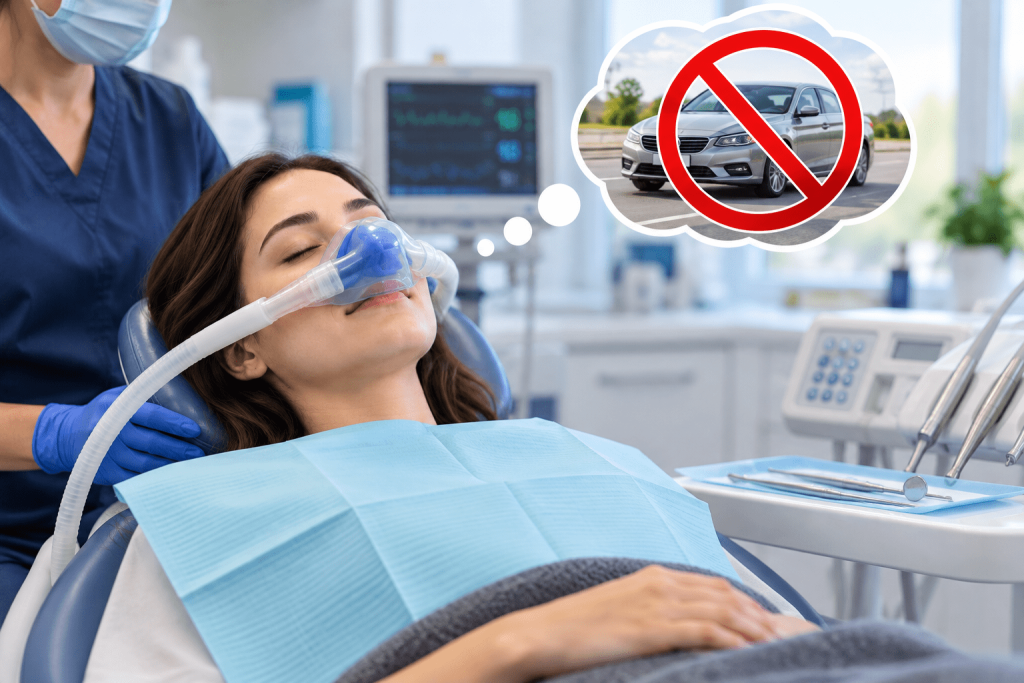
Dental sedation can make treatment more comfortable by helping patients feel calm and relaxed. However, the effects of sedation can continue after the dental appointment, even when we feel awake and able to communicate normally. For this reason, driving after dental sedation is generally not recommended until the effects of the medication have completely worn off and the dental team has confirmed that driving is safe.
The appropriate recovery period depends on the sedation method, medication, dosage, treatment performed, and individual response. Understanding what to expect before arranging dental sedation can help us plan transportation, recovery time, and aftercare more safely.
Can You Drive After Dental Sedation?
In most cases, we should not drive immediately after dental sedation, particularly when oral or IV sedatives have been used. Sedation can temporarily affect alertness, concentration, coordination, reaction time, memory, and judgment. These abilities are essential for operating a vehicle safely.
We may feel awake shortly after treatment while still experiencing residual effects from the medication. Feeling normal does not necessarily mean that our reflexes and decision-making abilities have fully returned to normal.
The type of sedation used makes an important difference. Nitrous oxide sedation generally wears off much faster than oral or IV sedation, while deeper forms of sedation may require a longer period of supervision and recovery.
Before leaving the dental practice, we should receive clear instructions about driving, transportation, eating, drinking, medications, physical activity, and other restrictions. When our dentist advises us not to drive, we should arrange another way to get home rather than relying on how alert we feel.
How Long Should You Wait Before Driving After Sedation?
There is no universal waiting period that applies to every patient or every form of dental sedation. The appropriate restriction depends on the medication used and the level of sedation achieved.
1. Nitrous Oxide Sedation
Nitrous oxide, commonly called laughing gas, is inhaled through a small mask placed over the nose. It can produce a relaxed, calm feeling while allowing us to remain conscious and responsive.
One advantage of nitrous oxide is that its effects generally decrease rapidly once the gas is stopped and we breathe normal oxygen. Dental professionals may provide oxygen at the end of treatment to help clear the nitrous oxide from the body.
However, we should not automatically assume that we can drive after laughing gas. Our dentist should assess our condition and provide specific instructions based on the treatment and our response. If other sedating medications have also been used, the driving restrictions may be different.
2. Oral Sedation
Oral sedation involves taking a prescribed sedative before or around the time of dental treatment. Depending on the medication and dosage, we may experience significant relaxation, sleepiness, impaired coordination, or reduced alertness.
The effects of oral sedation can continue after we leave the practice. For this reason, patients receiving oral sedation commonly need a responsible adult to drive them home and remain available during the recovery period when instructed.
We should never decide to drive simply because we feel more alert than expected. Sedative medications can continue affecting reaction time and judgment even after the strongest sensation of sleepiness has passed.
3. IV Sedation
IV sedation delivers medication directly into a vein, allowing the dental team to adjust the level of sedation during treatment. Because IV sedation can produce significant relaxation and impaired alertness, additional post-treatment precautions are generally required.
Patients receiving IV sedation should not drive themselves home. Transportation should be arranged before the appointment, and the dental practice will provide specific instructions regarding supervision and recovery.
Why is Driving After Dental Sedation Unsafe?
Driving requires continuous attention and rapid responses. Even a temporary reduction in these abilities can increase the risk of an accident.
1. Slower Reaction Times
Sedation can slow the way we respond to unexpected events. A sudden stop by another vehicle, a pedestrian crossing the road, or an obstacle appearing ahead may require an immediate response.
Even a small delay can make a significant difference when driving. We should therefore wait until the sedation has fully worn off and our dental professional has provided appropriate guidance.
2. Reduced Concentration
After sedation, maintaining consistent attention may be more difficult. We may become distracted, tired, or less able to process multiple sources of information simultaneously.
This is particularly important during busy traffic conditions, at intersections, on highways, and in unfamiliar areas.
3. Drowsiness and Fatigue
Sleepiness is one of the most common concerns following sedative medication. We may initially feel comfortable and alert in the dental office but become tired later as the medication continues to affect us.
Driving while drowsy can compromise attention and reaction time. Resting after treatment is often the safer choice.
4. Impaired Coordination
Sedation can temporarily affect physical coordination and balance. If our coordination is impaired when walking, it may also affect the precise movements required to operate steering, pedals, indicators, and other vehicle controls.
5. Temporary Memory or Judgment Changes
Some sedatives can affect short-term memory and decision-making. We may remember the dental appointment differently or have difficulty assessing situations accurately.
Because safe driving depends on sound judgment, we should not drive until these effects have been resolved.
What Should You Do After Dental Sedation?
Planning our recovery before the appointment can make the post-treatment period easier and safer.
- Arrange transportation when required by the type of sedation.
- Have a responsible adult accompany us when our dental team recommends supervision.
- Do not drive until we have been specifically advised that it is safe.
- Rest as directed rather than immediately returning to normal activities.
- Avoid alcohol while recovering from sedation.
- Take prescribed or recommended medications only according to instructions.
- Follow the dentist’s instructions regarding food and drinks.
- Avoid important financial, legal, or professional decisions while still affected by sedation.
- Avoid strenuous activities if our dental provider recommends limiting physical exertion.
- Contact the dental practice if unexpected or concerning symptoms develop.
The safest approach is to treat the recovery period seriously, even when we feel better sooner than expected.
What Can You Expect During Sedation Dentistry Recovery?
Recovery from sedation dentistry varies from one person to another. Depending on the medication and level of sedation, we may temporarily experience:
- Sleepiness
- Grogginess
- Mild dizziness
- Reduced concentration
- Fatigue
- Temporary memory gaps
- Slower responses
- Reduced coordination
The length and intensity of these effects can depend on the sedation method, medication used, dosage, duration of treatment, other medications, overall circumstances, and individual response.
We should follow the personalized recovery instructions provided by the dental team rather than comparing our experience with another patient’s recovery.
When Should You Contact a Dentist After Sedation?
Most patients recover without serious problems when appropriate sedation protocols and aftercare instructions are followed. However, we should contact the dental practice if we are concerned about symptoms that persist, worsen, or do not improve as expected.
Particular attention is appropriate if we experience persistent or worsening dizziness, difficulty staying awake, breathing difficulties, severe symptoms, unusual reactions, or other concerning changes.
Breathing difficulties or severe symptoms may require urgent medical attention rather than waiting for a routine dental appointment. When in doubt, we should seek appropriate professional medical advice promptly.
Can You Go Back to Work After Dental Sedation?
Returning to work immediately after sedation may not be appropriate, particularly following oral or IV sedation. Residual drowsiness, reduced concentration, and impaired coordination can make normal workplace activities more difficult.
This is especially important for people who operate machinery, drive as part of their job, work at heights, perform physically demanding tasks, or have other safety-sensitive responsibilities.
Even office-based work may be challenging if concentration and alertness remain reduced. Planning time away from work can provide an opportunity to recover without unnecessary pressure.
We should follow the recovery instructions given by our dentist and avoid returning to activities that require full alertness until we are ready to do so safely.
What If You Need Emergency Dental Treatment and Sedation?
Emergency dental treatment may be necessary when we experience severe tooth pain, dental trauma, swelling, infection, a broken tooth, or other urgent dental problems. Anxiety can make emergency treatment particularly stressful, and sedation may be considered when clinically appropriate.
Emergency sedation dentistry can help eligible patients remain calmer and more comfortable during necessary dental care. However, using sedation during urgent treatment does not eliminate the need for appropriate recovery arrangements.
If sedation is planned, we should arrange transportation before treatment whenever required. We should also tell the dental team about current medications, allergies, relevant medical history, previous reactions to sedation, and any concerns about previous dental experiences.
Patients searching for an emergency sedation dentist in Ellenbrook should ask the practice about available sedation options, transportation requirements, and post-treatment instructions before treatment begins.
Choosing a Sedation Dentist
Choosing an experienced dental provider can make the sedation process easier to understand and plan. Before treatment, we can discuss dental anxiety, previous experiences with sedation, the planned procedure, and which sedation option may be appropriate.
A sedation dentist in Ellenbrook can also explain what we should expect before, during, and after treatment. Understanding whether nitrous oxide, oral sedation, IV sedation, or another approach is being considered allows us to prepare appropriately.
For patients looking for a dentist in Ellenbrook who can discuss comfortable dental care, Aveley Dental can be considered when exploring available treatment and sedation options.
We should ask about:
- The type of sedation being considered
- How long its effects may last
- Whether an escort is required
- Whether we need to arrange transportation
- When we can return to work or normal activities
- What foods and drinks are permitted after treatment
- Which medications should be taken or avoided
- What symptoms should prompt us to contact the practice
Clear instructions before treatment can help us avoid uncertainty during recovery.
Final Thoughts: Plan Your Journey Home Before Sedation
We should never assume that we are safe to drive simply because we feel awake after dental sedation. Sedative effects can continue after leaving the dental practice and may temporarily affect reaction time, concentration, coordination, memory, and judgment.
Planning transportation before the appointment is one of the simplest ways to make recovery safer and less stressful. We should also follow every post-sedation instruction provided by our dental team and allow ourselves enough time to recover.
For patients considering comfortable dental treatment or looking for a sedation dentist in Ellenbrook, discussing sedation options, transportation requirements, and aftercare with Aveley Dental can help us prepare appropriately for the appointment.
Frequently Asked Questions About Driving After Dental Sedation
Can I drive myself home after dental sedation?
Generally, we should not drive ourselves home after oral or IV sedation. Depending on the sedation method, our dentist may require a responsible adult to take us home and supervise us during recovery.
How long after dental sedation can I drive?
There is no single recovery time for every patient. The appropriate restriction depends on the sedation method, medication, dosage, treatment, and individual response. We should follow our dentist’s specific instructions.
Can I drive after laughing gas at the dentist?
Nitrous oxide generally wears off relatively quickly after administration stops. However, we should follow the dental team’s instructions and should not drive if we remain drowsy, dizzy, uncoordinated, or otherwise impaired.
Can I drive after oral sedation?
We should not drive while oral sedation may still be affecting alertness, coordination, reaction time, memory, or judgment. Transportation should be arranged in advance when oral sedation is used.
Do I need someone to take me home after sedation?
An escort may be required, particularly after oral or IV sedation. The dental practice should tell us before treatment whether we need someone to drive us home or remain with us during recovery.
Can sedation affect me after I leave the dentist?
Yes. Some forms of sedation can continue affecting alertness, coordination, concentration, memory, and judgment after the appointment. We should follow all post-sedation instructions even if we feel awake.
What should I avoid after dental sedation?
We may be advised to avoid driving, alcohol, strenuous activities, operating machinery, and important decisions while recovering. The exact restrictions depend on the sedation used and our dentist’s instructions.